Battery reliability is essential for UPS systems, telecom networks, substations, data centers, hospitals, and other mission-critical facilities. Many operators ask:
What is the difference between battery monitoring and battery testing, and do you really need both? The short answer: yes, but the best modern solutions integrate both.
DFUN’s smart battery capacity testing system includes full BMS (battery monitoring) capabilities — continuous real-time data plus on-demand capacity verification. This article explains the synergy and why an integrated approach delivers the highest reliability.
✅ DFUN difference: Our battery testing (capacity testing) solution already contains BMS functions — voltage, internal resistance, temperature, SOC, SOH, and alarms — providing both continuous monitoring and accurate capacity validation in one system.
Quick Comparison: Monitoring vs Testing (Traditional View)
| Category | Battery Monitoring (BMS) | Battery Testing (Capacity) |
| Purpose | Detect deterioration and abnormal conditions early | Verify actual battery capacity and runtime |
| Frequency | 24/7 continuous | Periodic (e.g., annually) |
| Primary Output | Alarms, trends, health indicators | Capacity reports, pass/fail assessments |
| Main Benefit | Prevent unexpected failures | Validate battery replacement decisions |
But with DFUN’s integrated solution, you get both from a single system: continuous BMS data plus the ability to perform accurate capacity tests without additional hardware.
What Is Battery Monitoring (BMS)?
Battery monitoring is the continuous measurement and analysis of battery operating parameters. A Battery Monitoring System (BMS) collects data from individual cells and strings, providing real-time visibility into battery condition.
Monitored parameters include:
- Cell Voltage
- String Voltage
- Internal Resistance
- Temperature
- Charge / Discharge Current
- State of Charge (SOC)
- State of Health (SOH)
- Ripple Current
When abnormalities are detected, alarms are generated immediately, allowing maintenance to respond before failures occur.
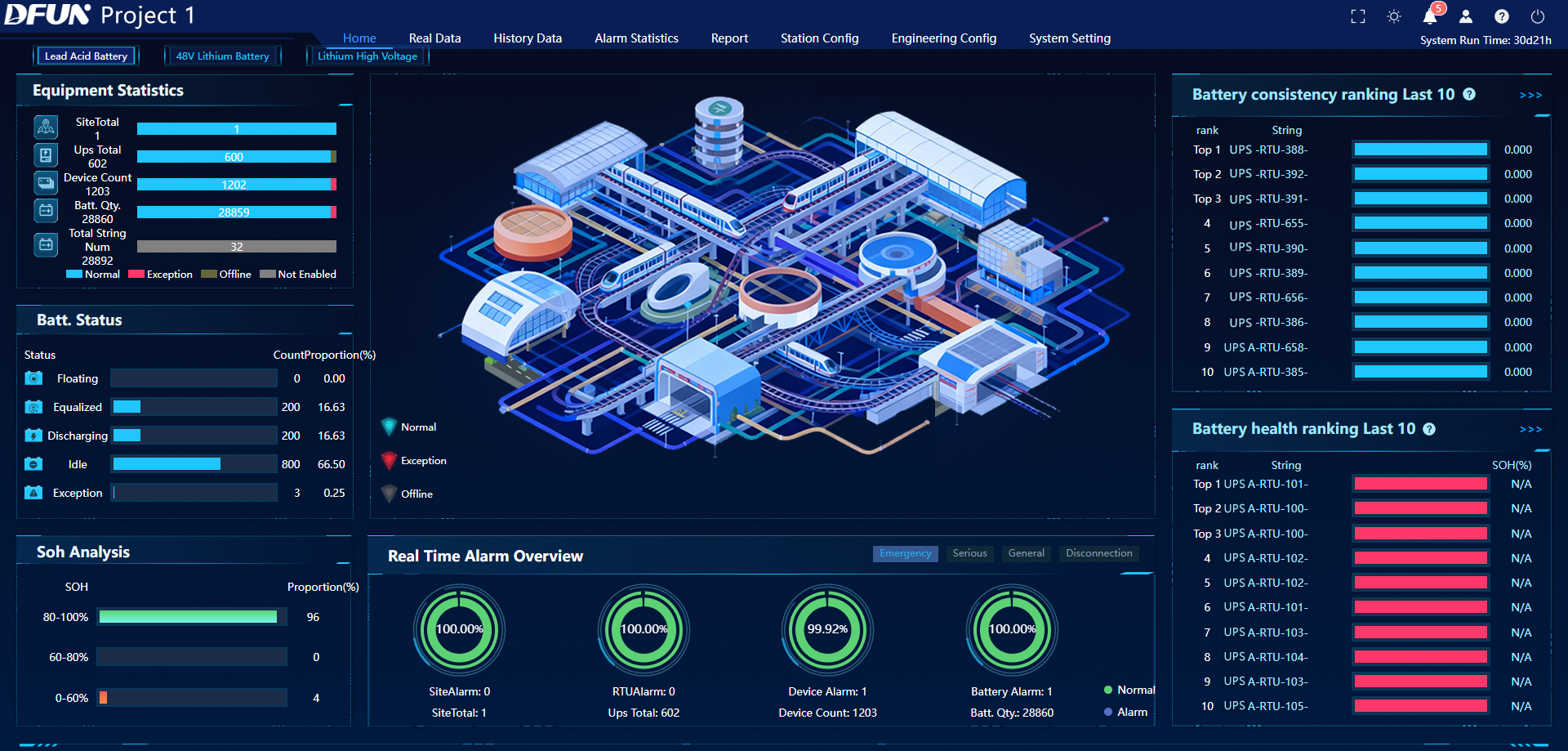
DFUN BMS centralized monitoring platform (railway application example)
What Is Battery Capacity Testing? (And Why DFUN’s Solution Includes BMS)
Battery capacity testing (also called discharge or load testing) evaluates a battery’s actual backup runtime and remaining capacity. Traditional testers only provide periodic snapshots — but DFUN’s smart capacity testing solution integrates full BMS functionality.
DFUN’s integrated testing system features:
- Continuous monitoring of voltage, internal resistance, and temperature (BMS core)
- Automated or manual capacity discharge tests with high accuracy
- Centralized data storage and trend analysis
- Remote alarm and real-time dashboard
This means you don’t need separate monitoring hardware. One system delivers both 24/7 battery health surveillance and on-demand capacity validation.
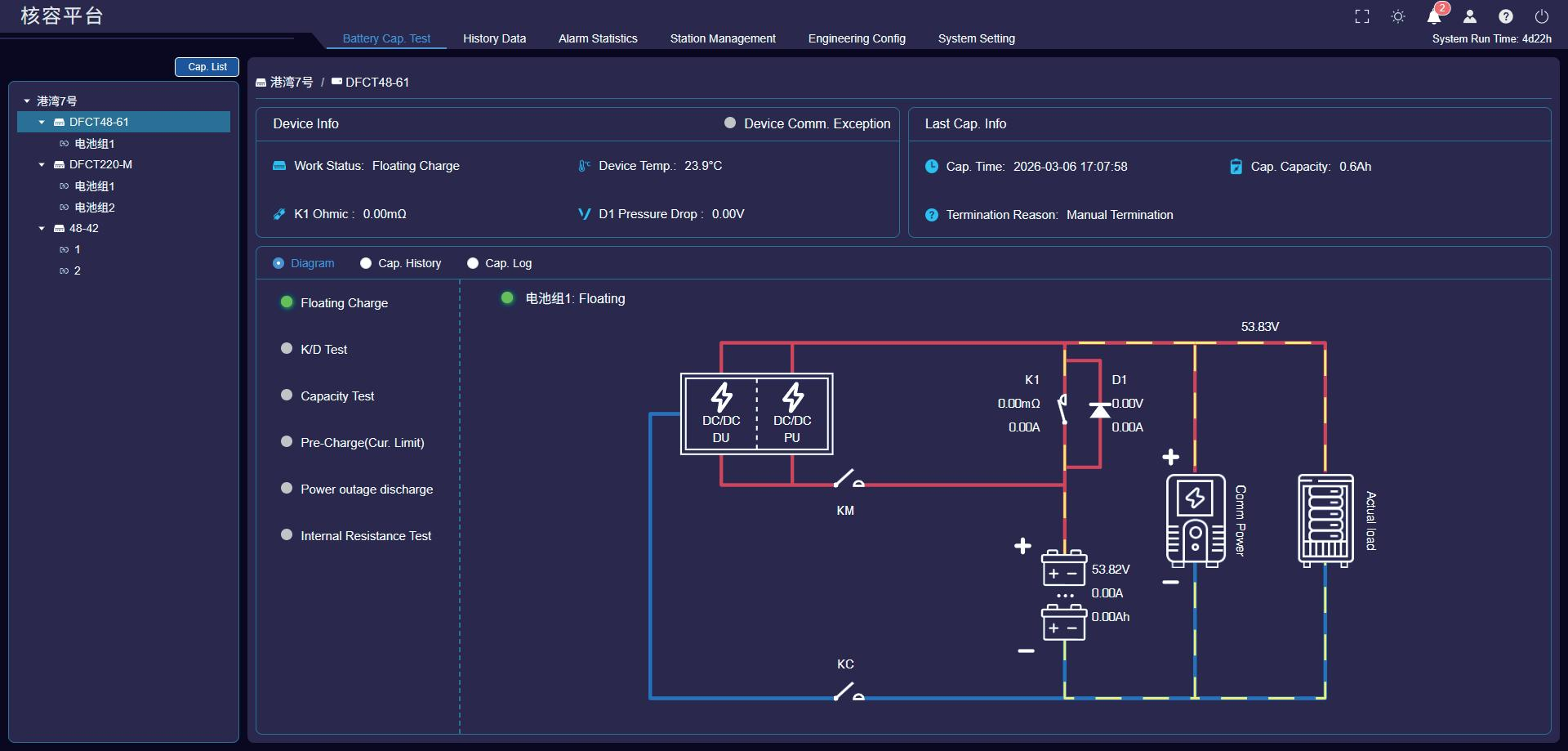
DFUN 4300 series capacity testing system software interface
Why Monitoring Alone Is Not Enough (Even With BMS)
BMS can identify warning signs: rising internal resistance, temperature anomalies, voltage imbalance. However, monitoring cannot directly measure actual available capacity in ampere-hours or backup minutes.
A battery may show normal voltage and temperature yet have lost 30% of its rated capacity — a hidden risk. That’s why periodic capacity testing remains essential to validate real runtime.
Why Traditional Testing Alone Is Not Enough (If No Monitoring)
Legacy capacity testers that only perform periodic discharge tests have a critical gap: between tests, battery degradation continues unnoticed. A cell could fail one week after a successful test, leaving the UPS unprotected.
That’s why DFUN integrates BMS into its testing solution. You get continuous monitoring between tests, so you’ll know immediately if a parameter drifts.
The Weakest Cell Effect: Why One Battery Can Cripple a String
A battery string is only as reliable as its weakest battery. One cell with high internal resistance or low capacity reduces total runtime and increases heat.
Consequences include:
- Reduced backup runtime
- Higher operating temperatures
- Premature aging of adjacent cells
- Unexpected UPS shutdown
DFUN’s integrated BMS identifies weak cells early; the capacity test confirms if replacement is needed — all from the same system.
Industry Applications for Integrated Monitoring + Testing
Data Centers
- Prevent UPS battery failures, maintain 24/7 uptime, schedule predictive maintenance.
Telecom Networks
- Monitor remote sites, reduce truck rolls, detect failures before outages.
Power Utilities & Substations
- Ensure DC system reliability, comply with NERC/FERC standards, improve resilience.
Hospitals
- Protect critical medical equipment, reduce outage risk, meet regulatory requirements.
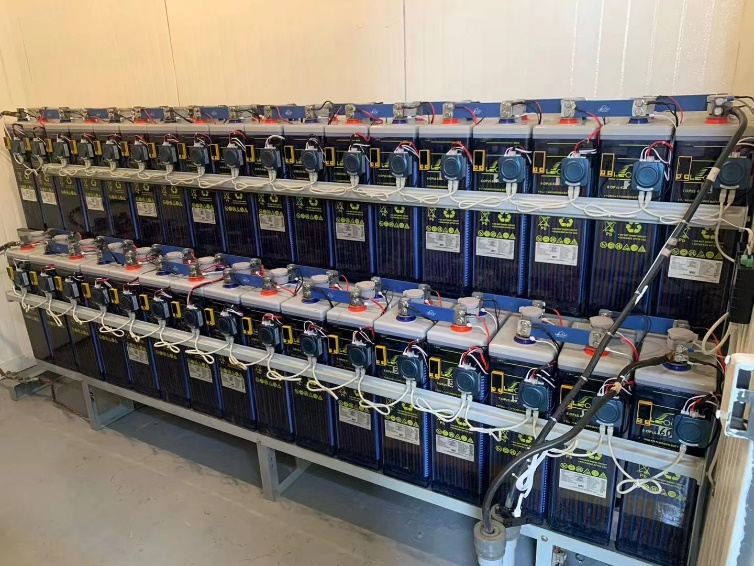
Integrated BMS + capacity testing ensures substation backup power reliability
When You Need Both: The DFUN Advantage
For mission-critical power systems, best practice is to have:
- Continuous BMS monitoring for early warning
- Periodic capacity testing for true runtime validation
With DFUN’s integrated solution, you don’t buy two separate systems. One platform does it all:
| Requirement | DFUN Integrated Solution |
| Early Failure Detection | ✓ 24/7 BMS |
| Capacity Verification | ✓ Built-in discharge testing |
| Weak Cell Identification | ✓ Trend analysis + test results |
| Battery Replacement Planning | ✓ Data-driven decisions |
| Centralized Management | ✓ DFCS4200 platform |
The most reliable strategy: Integrated BMS + Capacity Testing + Centralized Management Platform.
How DFUN Supports Complete Battery Lifecycle Management
DFUN provides an integrated solution that combines battery monitoring and capacity testing in one unified system:
- Battery Monitoring System (BMS) – continuous cell-level data
- Smart Battery Capacity Testing Solution – automated or manual discharge, includes full BMS functionality
- DFCS4200 Centralized Management Platform – remote monitoring, alarms, reporting
Key capabilities:
- Real-time battery monitoring (voltage, IR, temperature, SOC, SOH)
- Online / off-line capacity verification
- AI-based health analysis and predictive alerts
- Multi-site remote management
- Lifecycle asset management and replacement recommendations
This integrated approach improves reliability, reduces maintenance costs, and eliminates the blind spots of separate monitoring-only or test-only systems.
Conclusion
Battery monitoring and capacity testing serve complementary purposes. The most effective solution for critical infrastructure is one that integrates both — continuous real-time surveillance plus accurate runtime validation.
DFUN’s smart battery capacity testing solution already includes full BMS features, giving you a single, cost-effective platform for complete battery lifecycle management.
Frequently Asked Questions (FAQ)
Does DFUN’s capacity testing solution include battery monitoring?
Yes. DFUN smart battery capacity testing system integrates full BMS: voltage, internal resistance, temperature, SOC, SOH, and real-time alarms.
Can battery monitoring alone replace capacity testing?
No. Monitoring provides early warning but cannot measure actual runtime. You still need periodic capacity verification — which DFUN’s solution provides.
How often should capacity testing be performed?
Typically annually or per maintenance policy. With continuous BMS data, you can optimize test intervals based on actual battery health trends.
What is the Weakest Cell Effect?
The entire battery string’s performance is limited by its weakest cell. DFUN’s system identifies weak cells early and validates via capacity test.
Can DFUN’s system prevent thermal runaway?
Yes. Continuous temperature monitoring and internal resistance trends can detect precursors to thermal runaway, enabling preventive action.
Which industries benefit most from DFUN integrated solution?
Data centers, telecom, utilities, hospitals, railways, and industrial facilities with UPS or DC battery banks.
Why choose DFUN over separate monitoring and test systems?
Lower total cost, simplified installation, single software platform, and no data integration headaches — plus the assurance that both functions work seamlessly.

 Русский
  Español
  Deutsch
  简体中文
简体中文  ไทย
ไทย  Français
  English
  Português
  italiano
  Bahasa Melayu
  हिन्दी
  Tiếng Việt
  日本語
日本語  한국어
한국어  বাংলা
বাংলা  עברית
עברית  Latine
  Nederlands
  українська
  தமிழ்
தமிழ்  Polski
  Türkçe
  ພາສາລາວ
  ភាសាខ្មែរ
  ဗမာစာ
ဗမာစာ  Filipino
  Suomi
Suomi  Ελληνικά
  Svenska
  Norsk
Norsk  magyar
  Română
  Čeština
  Монгол
  қазақ
қазақ  Српски
  فارسی
فارسی  Kiswahili
  Slovenčina
  Slovenščina
  Հայերեն
  Dansk
Dansk  اردو
اردو  Shqip
Shqip  Hrvatski
  Afrikaans
  Gaeilge
  Eesti keel
  Māori
Māori  සිංහල
සිංහල  नेपाली
  Oʻzbekcha
  latviešu
  অসমীয়া
  Aymara
  Azərbaycan dili
  Bamanankan
  አማርኛ
አማርኛ  Euskara
  Беларуская мова
  भोजपुरी
  Bosanski
  Български
  Català
  Cebuano
  Corsu
Corsu  ދިވެހި
  डोग्रिड ने दी
  Esperanto
  Eʋegbe
  Frysk
Frysk  Galego
  ქართული
  guarani
  ગુજરાતી
  Kreyòl ayisyen
  Hausa
Hausa  ʻŌlelo Hawaiʻi
  Hmoob
Hmoob  íslenska
  Igbo
Igbo  Ilocano
  Basa Jawa
  ಕನ್ನಡ
ಕನ್ನಡ  Kinyarwanda
  गोंगेन हें नांव
  Krio we dɛn kɔl Krio
  Kurdî
Kurdî  Kurdî
Kurdî  Кыргызча
  Lingala
  Lietuvių
  Oluganda
  Lëtzebuergesch
  Македонски
  मैथिली
  Malagasy
  മലയാളം
  Malti
Malti  मराठी
मराठी  ꯃꯦꯇꯥꯏ (ꯃꯅꯤꯄꯨꯔꯤ) ꯴.
  Mizo tawng
  Chichewa
  ଓଡ଼ିଆ
ଓଡ଼ିଆ  Afaan Oromoo
  پښتو
پښتو  ਪੰਜਾਬੀ
  Runasimi
  Gagana Samoa
  संस्कृत
  Gaelo Albannach
  Sepeti
  Sesotho
  chiShona
  سنڌي
سنڌي  Soomaali
  Basa Sunda
  Wikang Tagalog
  Тоҷикӣ
  Татарча
  తెలుగు
  ትግንያውያን
  Xitsonga
  Türkmençe
  संस्कृत
  ئۇيغۇرچە
  Cymraeg
  ייִדיש
  Yorùbá
  isiZulu