Smart Battery Capacity Testing Solution
Real‑time, Remote, Online Measurement of Actual Battery Energy Storage
What is Smart Battery Capacity Testing?
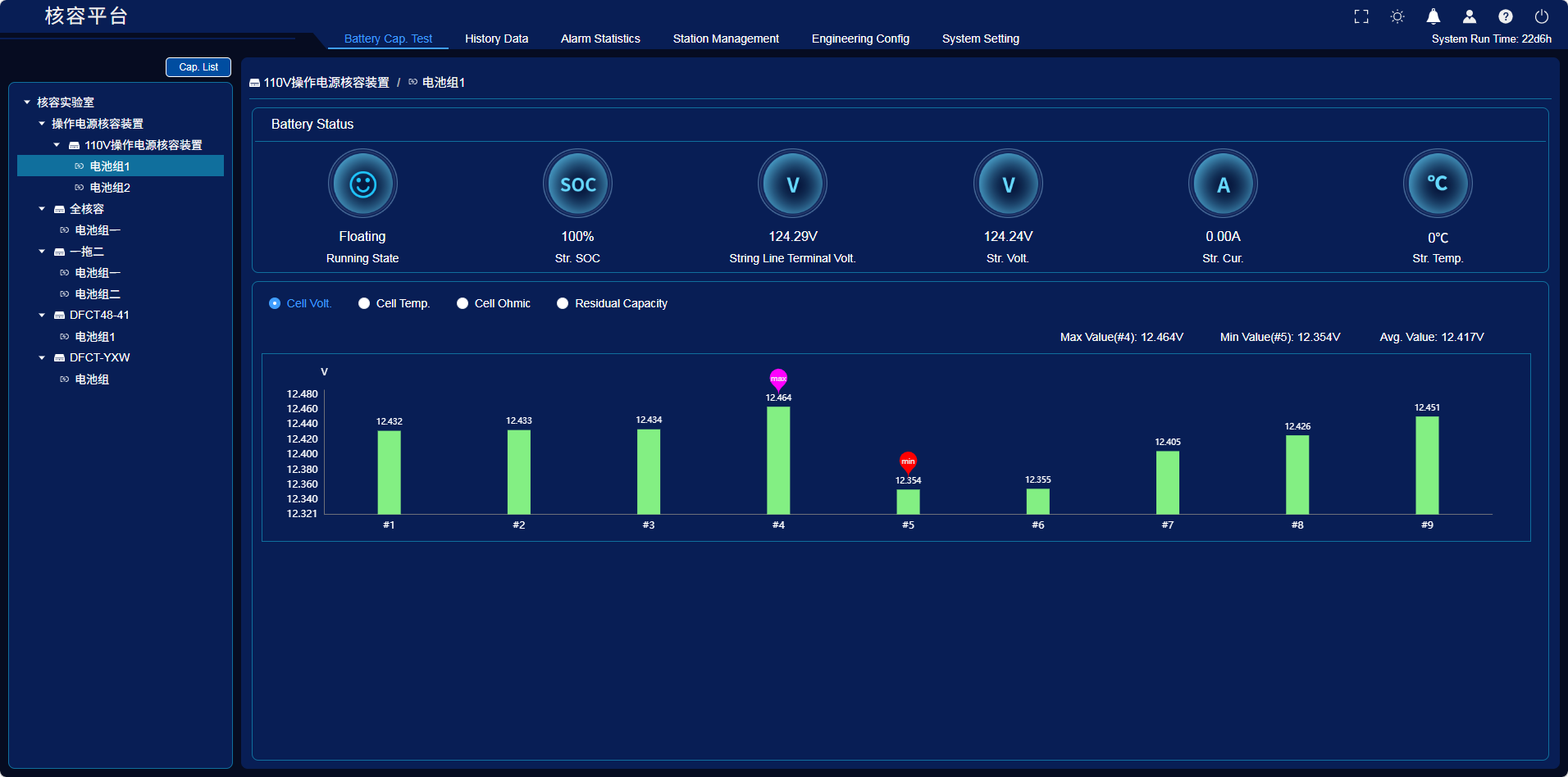
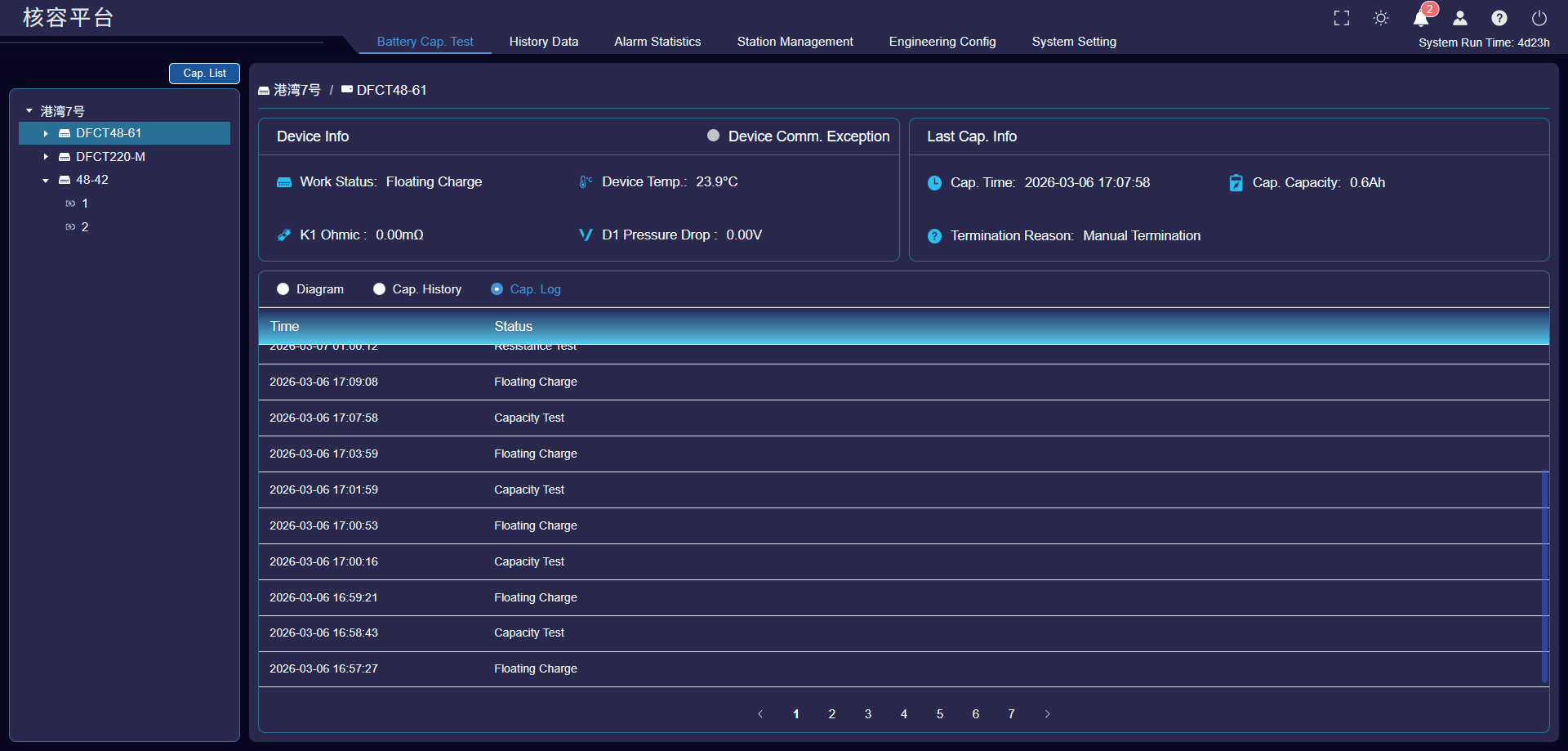
Smart Battery Capacity Testing is an online real-load discharge technology that measures battery capacity and SOH without interrupting critical power systems.
| Traditional Methords | DFUN SOLUTION | |
| SYSTEM CONTINUTY | Requires Complete Shutdown | 100% Online & Active |
| SAFETY PROFILE | High Runway Risk | Active AI-Driven Protection |
| OPERATION MODE | High Manual Effort | Fully Automated Operation |
| DATA ACCURACY | Slow Manual Data Processing | Instant, High-Precision Reports |
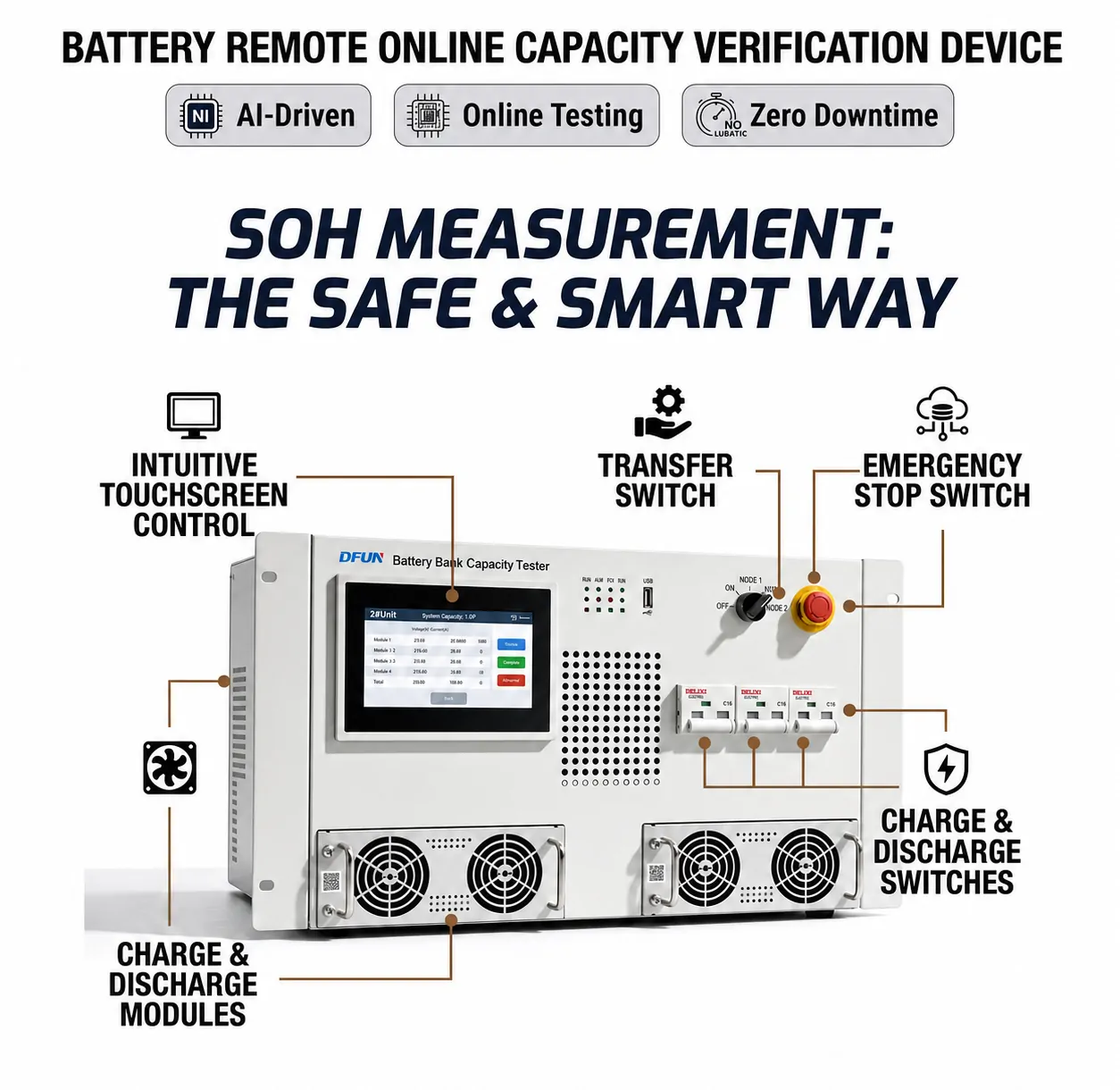
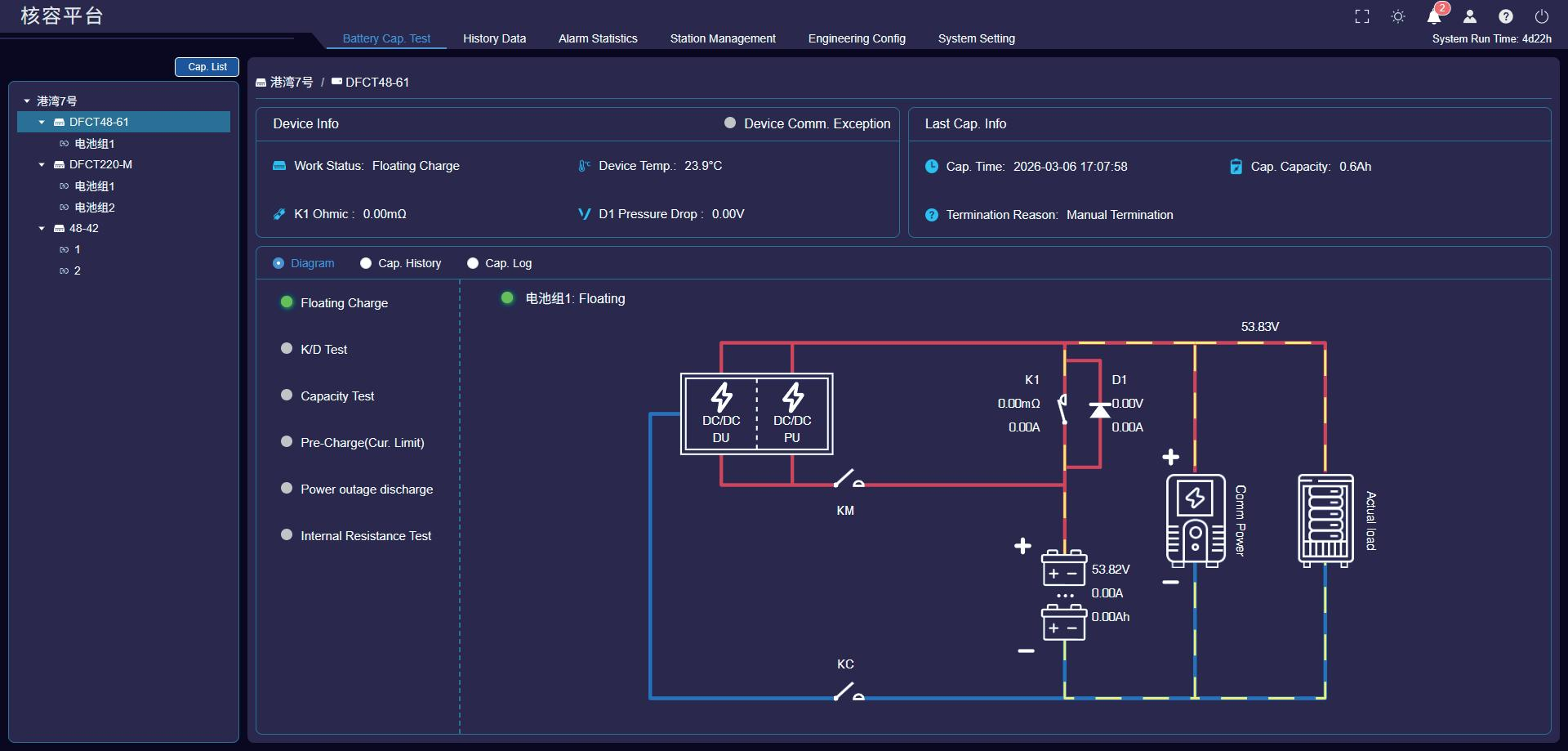
Limitations of Traditional Capacity Testing

Excessive heat & energy waste
Manual load-bank testing generates significant heat and consumes large amounts of energy, increasing cooling costs and safety risks.

Downtime risk
Requires disconnecting the battery from the system, exposing critical loads to potential power interruptions.

Inaccurate & inconsistent data
Manual data recording is error-prone and lacks repeatability, leading to unreliable capacity assessments.

Limited test depth
Single-bank tests can only reach 50% of rated capacity, failing to validate true battery health under full load.
Cell-Level Capacity Testing and the “Weakest Link“ Effect
The Weakest Link Effect
A battery string is only as strong as its weakest cell.
One under-performing cell can compromise the entire string under load.
Traditional string-level testing cannot locate the failing cell.
Testing Limitations of Manual Load Banks
Requires disconnecting the battery, causing downtime risk.
Only tests up to 50% of rated capacity - not full load.
Manual data recording is error prone and inconsistent.
Generates excessive heat and energy waste.
Consequences for Critical Operations
Shortened UPS backup time, increasing risk for critical loads.
Hidden weak links cause unexpected failures during outages.
Higher replacement frequency and rising O&M costs.
Increased risk of over-discharge and thermal runaway.

DFUN Smart Capacity Testing VS Traditional Manual Load-Bank Testing
Item
Traditional
DFUN
Power interruption
Requires disconnection
Zero interruption
Heat generation
High heat & energy waste
No artificial heat
Test capacity
Up to 50% only
Full rated capacity
Data recording
Manual,error‑prone
Automated, AI analysis
Reporting
Paper logs
Cloud PDF/Excel
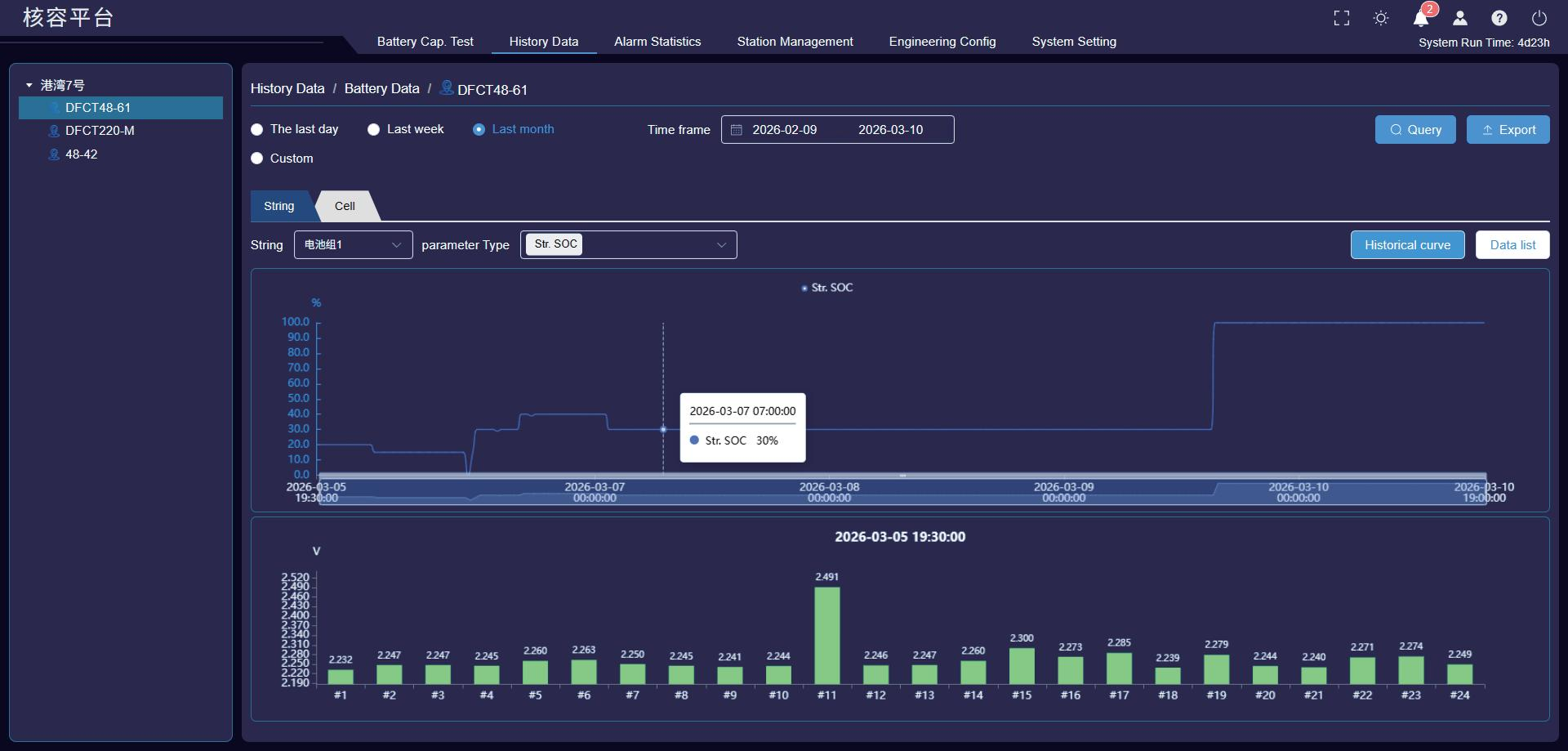
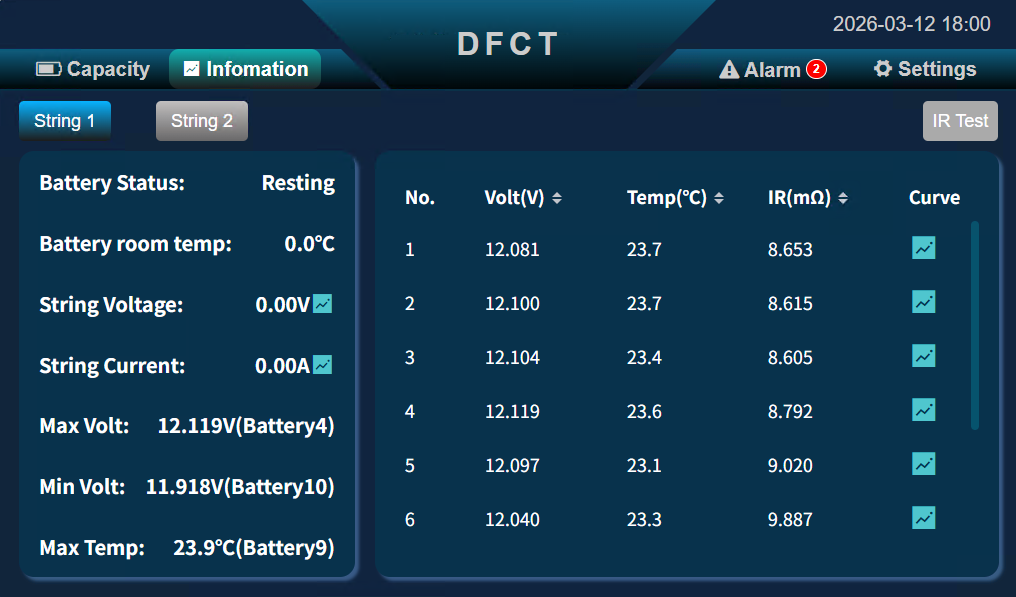


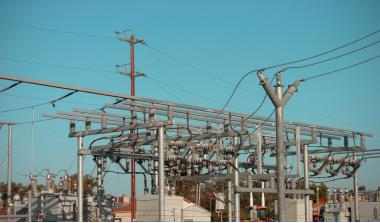
Applications of DFUN Smart Battery Capacity Testing



Why Choose DFUN?
Over 3,000 successful installations worldwide
Compatible with major UPS and battery brands
Supports open protocols: IEC / Modbus / SNMP
Provides remote maintenance and AI analysis services
OEM / system-integration customization available

Our Certificate
Our commitment to quality, safety, and compliance is reflected in the rigorous certifications the DFUN Battery Monitoring System has earned. These certifications validate that our product meets or exceeds global industry standards, ensuring reliability and peace of mind for users across diverse applications.



Related Blogs
-
 For the capacity testing of battery packs for backup power systems, there are currently two main methods: traditional capacity testing and remote online capacity testing. Traditional capacity testing relies on manually connecting dummy loads to individually inspect and verify batteries at dispersedValue Article
 -
 Manual Capacity Testing IssuesSafety RisksData Safety: When there are deteriorated batteries within the battery bank, some batteries are at risk of over-discharge, causing irreversible damage. Lead-acid batteries have a high likelihood of complete degradation within three months, while manual capaciValue Article
 -
 The actual discharge capacity of batteries that have been operating under float-charge conditions for extended periods is often unclear. Relying solely on conventional capacity testing methods provides limited accuracy. While changes in battery voltage and internal resistance can partially indicateValue Article
 -
 Background for Online Capacity TestingWith the intelligent development of power systems and the increasing number of substations, the maintenance workload of DC systems has become more demanding, and the need for intelligent monitoring and maintenance of batteries has become increasingly urgent. BatValue Article


Q1: What is Smart Battery Capacity Testing?
Q2: Why is battery capacity testing important for UPS and DC power systems?
Q3: What are the limitations of traditional load-bank battery testing?
Q4: How does DFUN Smart Battery Capacity Testing reduce downtime risk?
Q5: Can the system identify weak individual batteries?
Q6: Does DFUN support online battery capacity testing without external load banks?
Q7: What communication protocols does DFUN support?
Q8: What are the benefits of online battery capacity testing?
Keep In Touch With Us
Stay connected with us to get the latest updates on the DFUN Battery Monitoring System, technical insights, and tailored solutions for your needs. We’re always here to listen and assist.
Mob:+86-15919182362
E-mail:info@dfuntech.com