How to Choose the Best Battery Monitoring System for Data Centers (2026)
TL;DR – What You’ll Learn in 30 Seconds: • Traditional battery monitoring lacks cell-level visibility → hidden risks of sudden failure. • Modern BMS offers 24/7 real‑time data, early warnings, and seamless integration. • Key selection criteria: cell‑level monitoring, communication protocols (Modbus/SNMP), scalability. • A good BMS can reduce unexpected battery failures by up to 70% and cut inspection costs.
In today’s data centers, uptime is everything. A single power interruption can trigger massive financial losses, service disruption, and long‑term reputational damage. While most facilities invest heavily in UPS systems and redundancy, one critical component is often underestimated: the battery monitoring system.
According to the Uptime Institute, over 30% of data center outages are caused by battery failures. In many cases, the root cause is not a sudden event, but the gradual, unnoticed degradation of individual battery cells. A single weak cell within a string can compromise the entire backup system. Without proper monitoring, these issues stay hidden until the next outage.
What is the Best Battery Monitoring System for Data Centers?
The best BMS for data centers should provide:
Real-time cell-level monitoring – Voltage, internal resistance, temperature per battery.
Predictive analytics – Trend analysis and early warnings before failure.
UPS integration – Seamless communication with existing UPS and DCIM systems.
Multi-site remote monitoring – Centralized visibility across multiple data centers.
Limitations of Traditional Battery Monitoring
Many data centers still rely on manual inspections or basic UPS‑integrated monitoring. While these methods provide some visibility, they come with serious limitations:
No cell‑level visibility – Traditional systems only measure string voltage and charge/discharge current. Early cell degradation and imbalance go unnoticed.
Periodic inspections, delayed response – Monthly or quarterly checks leave long gaps where faults can develop without any alert.
High maintenance costs – A data center with 10,000 batteries may require over 500 man‑hours per year for manual voltage checks, often with inconsistent results.
Why Battery Monitoring is Critical in Data Centers
Batteries don’t fail suddenly – they degrade slowly over months. A single weak cell can go unnoticed until a power outage triggers a full string failure. Real‑time monitoring detects early signs of degradation (rising internal resistance, voltage imbalance, temperature drift), allowing proactive replacement. DFUN BMS provides early warnings days or weeks in advance – not just alerts after failure.
How a Modern BMS Solves These Challenges
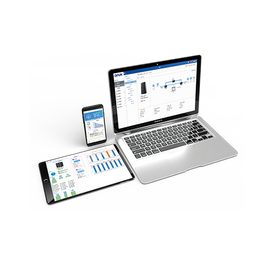
DFUN Battery Monitoring System (BMS) provides continuous, real‑time visibility into battery health, enabling a shift from reactive to predictive maintenance.
✅ Cell‑Level Monitoring with Distributed Sensors
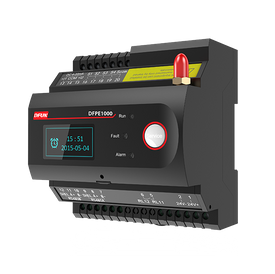
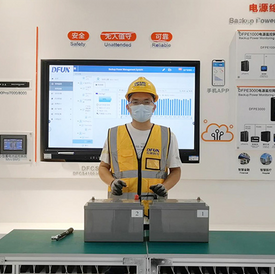
A typical advanced BMS architecture includes a central controller and distributed sensors on each battery cell. The controller aggregates data, manages alarms, and handles communication. Each sensor measures voltage, temperature, and internal resistance at the cell level – detecting anomalies before they cause failures.
✅ 24/7 Real‑Time Monitoring & Early Warning
Unlike periodic inspections, a BMS operates continuously. It immediately sends alerts (via email, SMS, or SNMP traps) when parameters deviate from normal ranges, allowing operators to act before a failure escalates.
✅ Monitoring of Critical but Overlooked Parameters
Ripple voltage, ripple current, temperature variations, and internal resistance changes can all shorten battery life. A capable BMS tracks these factors continuously, giving a complete picture of battery health.
✅ Seamless Integration with Existing Infrastructure
Modern BMS solutions are designed to complement, not replace, your current systems. Supported protocols include:
Modbus TCP / RTU
SNMP
MQTT
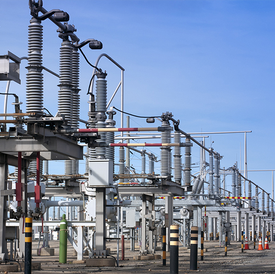
IEC 61850 (for substations)
This allows easy integration with DCIM, SCADA, and existing UPS monitoring platforms.
✅ Scalability for Large Deployments
Data centers often operate hundreds or thousands of batteries across multiple strings. A suitable BMS should support up to 6 strings per controller and scale without complex redesign. DFUN’s PBMS9000, for example, monitors up to 480 cells (6 strings) with a single controller.
How to Choose the Right Battery Monitoring System
When evaluating battery monitoring systems, consider these five key criteria:
Compatibility – Does it support VRLA, Ni-Cd, lithium, and flooded batteries? Multi‑chemistry support is essential for mixed fleets.
Real-time monitoring – Does it measure voltage, internal resistance, and temperature at the cell level? String‑level only is not enough.
Integration – Can it communicate with your UPS, DCIM, or SCADA via Modbus, SNMP, or MQTT?
Scalability – Can it handle hundreds or thousands of batteries across multiple strings without a complex redesign?
Predictive analytics – Does it provide trend analysis and early warnings, not just raw data?
Real‑World Benefits – Proven in the Field
In a recent deployment for a European colocation provider with 2,400 UPS batteries, DFUN’s BMS detected 23 cells with rising internal resistance over a 3‑month period. The operator replaced those cells proactively, avoiding a potential string failure that would have taken down critical IT loads. Similar projects report a 50–70% reduction in unexpected battery‑related incidents after deploying cell‑level monitoring.
How to Choose the Right BMS – A Quick Checklist
When evaluating battery monitoring systems, use this checklist:
✅ Does it monitor every cell (voltage, internal resistance, temperature)?
✅ Does it support open protocols (Modbus, SNMP, MQTT, IEC 61850)?
✅ Can it scale to hundreds or thousands of batteries?
✅ Does it offer remote access and real‑time alerts?
✅ Is there a local HMI option for on‑site troubleshooting?
✅ Does it include trend analysis and predictive insights (not just raw data)?
Comparison: Traditional Monitoring vs. Modern BMS
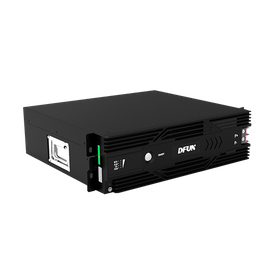
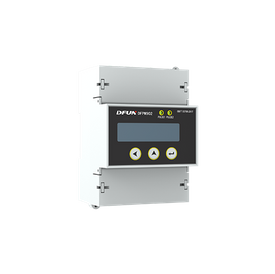
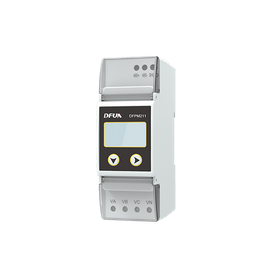
Recommended Battery Monitoring System – DFUN Solution
DFUN offers a complete battery monitoring solution tailored for data centers:
Supports VRLA, Ni-Cd, lithium, and flooded batteries.
Cell‑level monitoring of voltage, internal resistance, and temperature.
Seamless integration with UPS, DCIM, and SCADA via Modbus/SNMP.
Remote web access, real‑time alerts, and 5‑year data storage.
Scalable from 1 string to 6 strings (480 cells) per controller.
Contact our team for a tailored recommendation based on your battery layout.
Feature
Traditional (String‑level)
Modern BMS (Cell‑level)
Cell voltage monitoring
❌ No
✅ Yes
Internal resistance tracking
❌ No
✅ Yes
Temperature per cell
❌ No
✅ Yes
24/7 real‑time alerts
⚠️ Limited
✅ Yes
Predictive analytics
❌ No
✅ Yes
Open protocols (Modbus/SNMP)
❌ Usually not
✅ Yes
Frequently Asked Questions (FAQ)
Q1: What is a battery monitoring system (BMS)?
A Battery Monitoring System (BMS) continuously tracks key parameters like voltage, current, internal resistance, and temperature of each battery cell, providing real‑time alerts and predictive analytics to prevent failures.
Q2: What is the best BMS for data centers?
The best BMS offers cell‑level monitoring, supports multiple battery chemistries, integrates with UPS/DCIM via open protocols, scales to thousands of batteries, and provides predictive analytics. DFUN BMS meets all these criteria.
Q3: How does UPS battery monitoring work?
UPS battery monitoring uses distributed sensors on each battery to measure voltage, internal resistance, and temperature. Data is aggregated by a central controller and sent to DCIM or network management systems via Modbus, SNMP, or MQTT.
Q4: What is VRLA battery monitoring?
VRLA battery monitoring is the process of continuously tracking the health of Valve‑Regulated Lead‑Acid batteries – commonly used in data centers – to detect degradation, imbalance, and thermal runaway before failure.
Q5: Can a BMS integrate with my existing UPS or DCIM?
Yes, via standard protocols like Modbus, SNMP, and MQTT. Most modern BMS solutions are designed to complement existing infrastructure.
Q6: How much can a BMS reduce maintenance costs?
Operators report 30–50% reduction in manual inspection labor, plus avoidance of expensive emergency call‑outs and premature battery replacement.
Ready to choose the right BMS for your data center?
Get a free consultation and a tailored recommendation based on your battery count and layout.
For more information on data center battery monitoring solutions, visit our Battery Monitoring System page or contact our team to discuss your specific project requirements.