Modern substations depend on DC battery systems to operate protection relays, circuit breakers, SCADA equipment, communication systems, and emergency lighting during a power outage. If one weak cell fails, the reliability of the entire battery string may be compromised.
A substation battery monitoring system provides continuous visibility into battery condition. By monitoring every cell and battery string in real time, utilities can detect early signs of deterioration, reduce manual inspections, and prevent unexpected DC power failures.
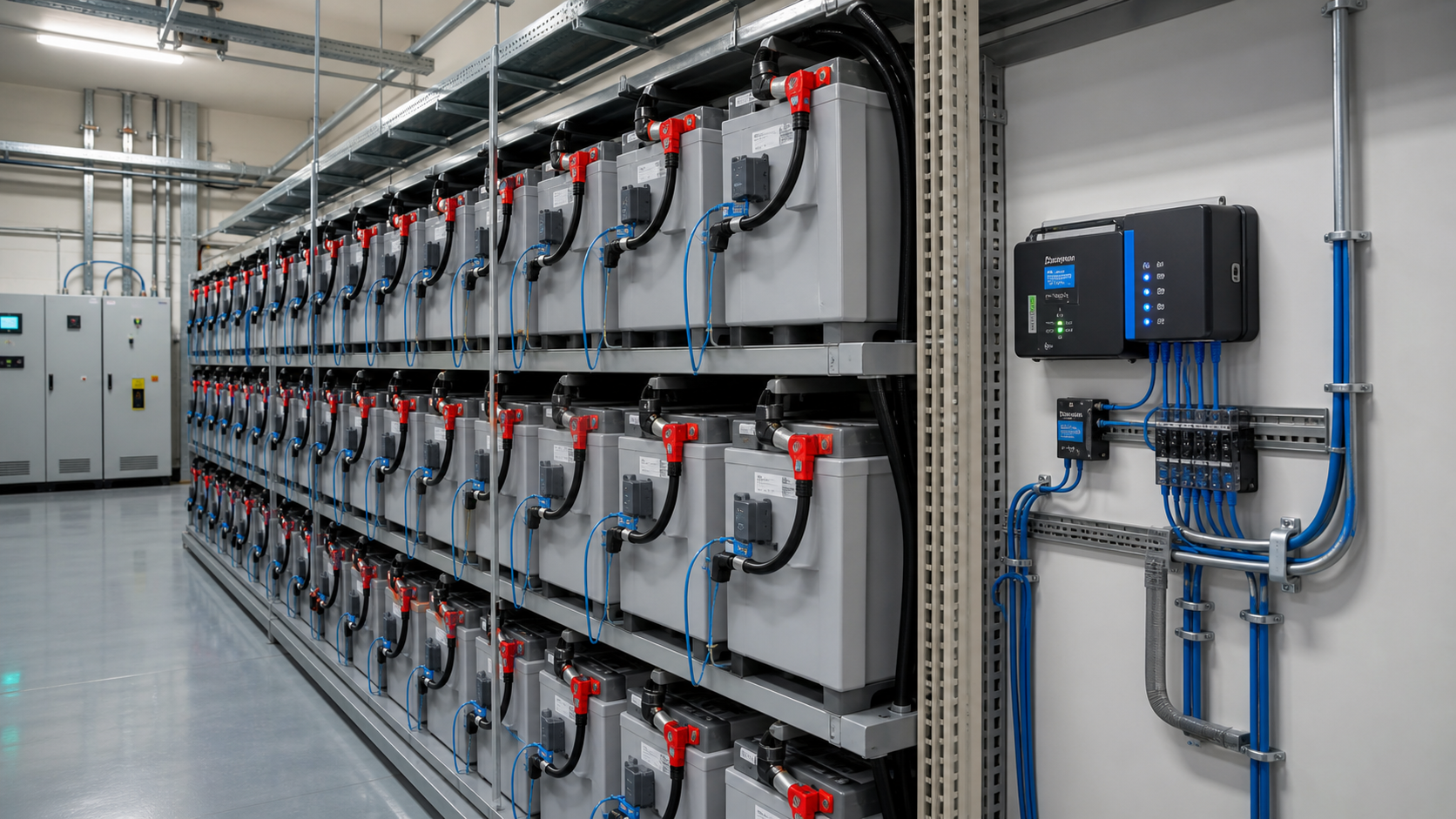
Why Substation Battery Monitoring Is Important
Substation batteries often remain on float charge for many years. During this period, aging, corrosion, loose connections, charging problems, and temperature changes can develop without obvious symptoms.
Periodic inspection provides only a snapshot of battery condition. In comparison, an online substation battery monitor operates 24/7 and identifies abnormal changes before they affect critical equipment.
Continuous monitoring helps utilities:
- Detect weak or deteriorating cells early
- Prevent protection relay and circuit breaker failures
- Reduce routine manual inspection workload
- Improve personnel and equipment safety
- Support condition-based battery maintenance
- Increase substation DC system reliability
Common Risks in Unmonitored DC Battery Systems
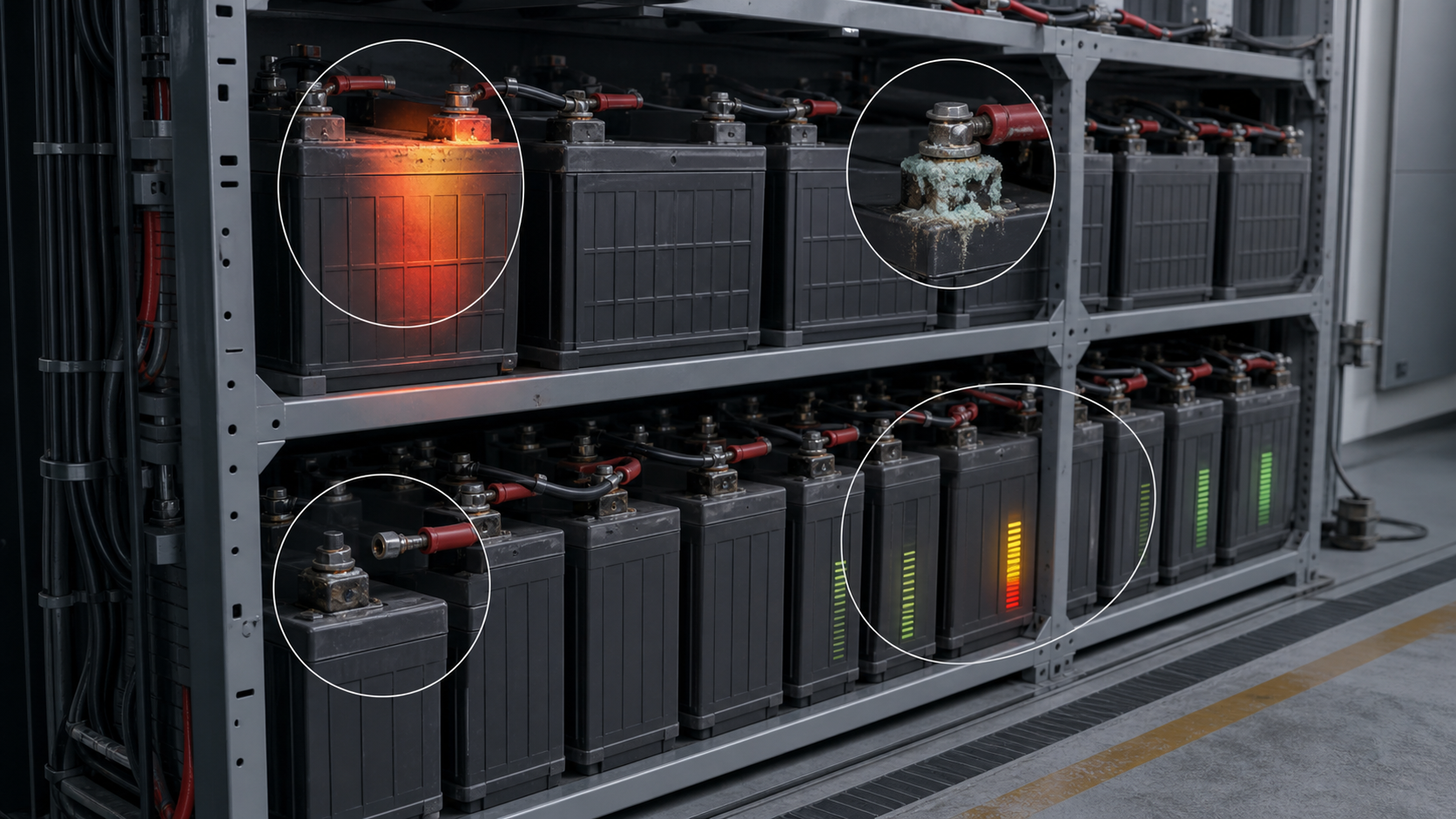
Battery failures usually develop gradually rather than occurring without warning. A reliable DC battery monitoring system can identify many of these problems through voltage, resistance, temperature, and current trends.
Common risks include:
- Battery aging and capacity loss
- Increased internal resistance
- Cell voltage imbalance
- Loose or corroded terminal connections
- Abnormal battery temperature
- Charger or float-current abnormalities
- Ripple current and string imbalance
Without continuous monitoring, these conditions may remain hidden until the battery is required during an emergency.
Ni-Cd and VRLA Battery Monitoring
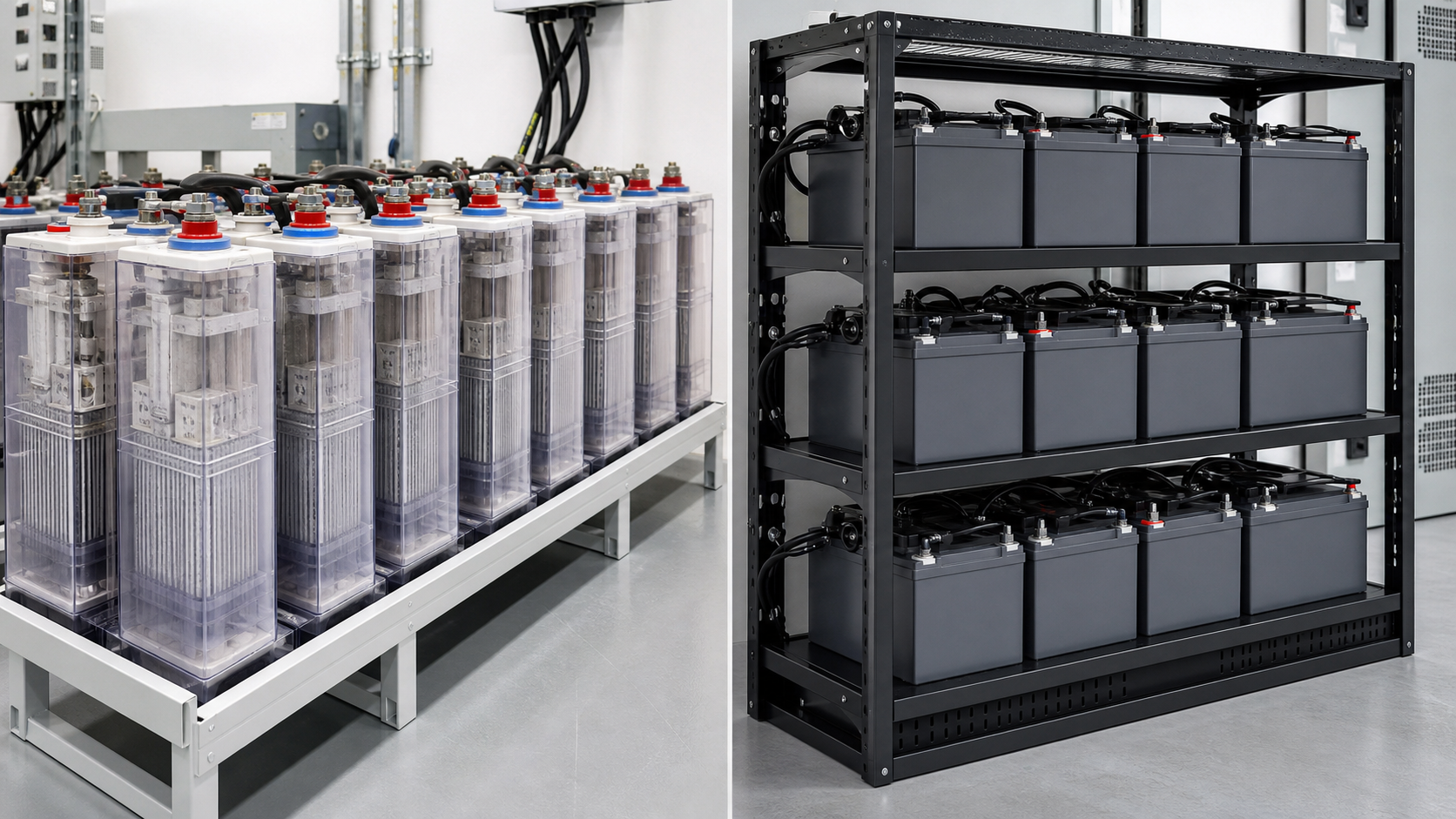
Electrical substations commonly use Nickel-Cadmium (Ni-Cd), Valve-Regulated Lead-Acid (VRLA), or flooded lead-acid batteries. Each chemistry requires a suitable monitoring strategy.
Ni-Cd Battery Monitoring
Ni-Cd battery monitoring should focus on individual cell voltage, charging condition, temperature, electrolyte-related aging trends, and string performance. Because internal resistance changes may be less pronounced than in VRLA batteries, long-term voltage and charging trends are especially important.
VRLA Battery Monitoring
VRLA battery monitoring typically focuses on cell voltage, internal resistance, temperature, charging current, and capacity degradation. A rising internal resistance trend can provide an early warning of battery aging and reduced backup capability.
A flexible substation battery monitoring solution should support Ni-Cd, VRLA, VLA, and lithium batteries on one platform.
What Should a Substation Battery Monitor Measure?
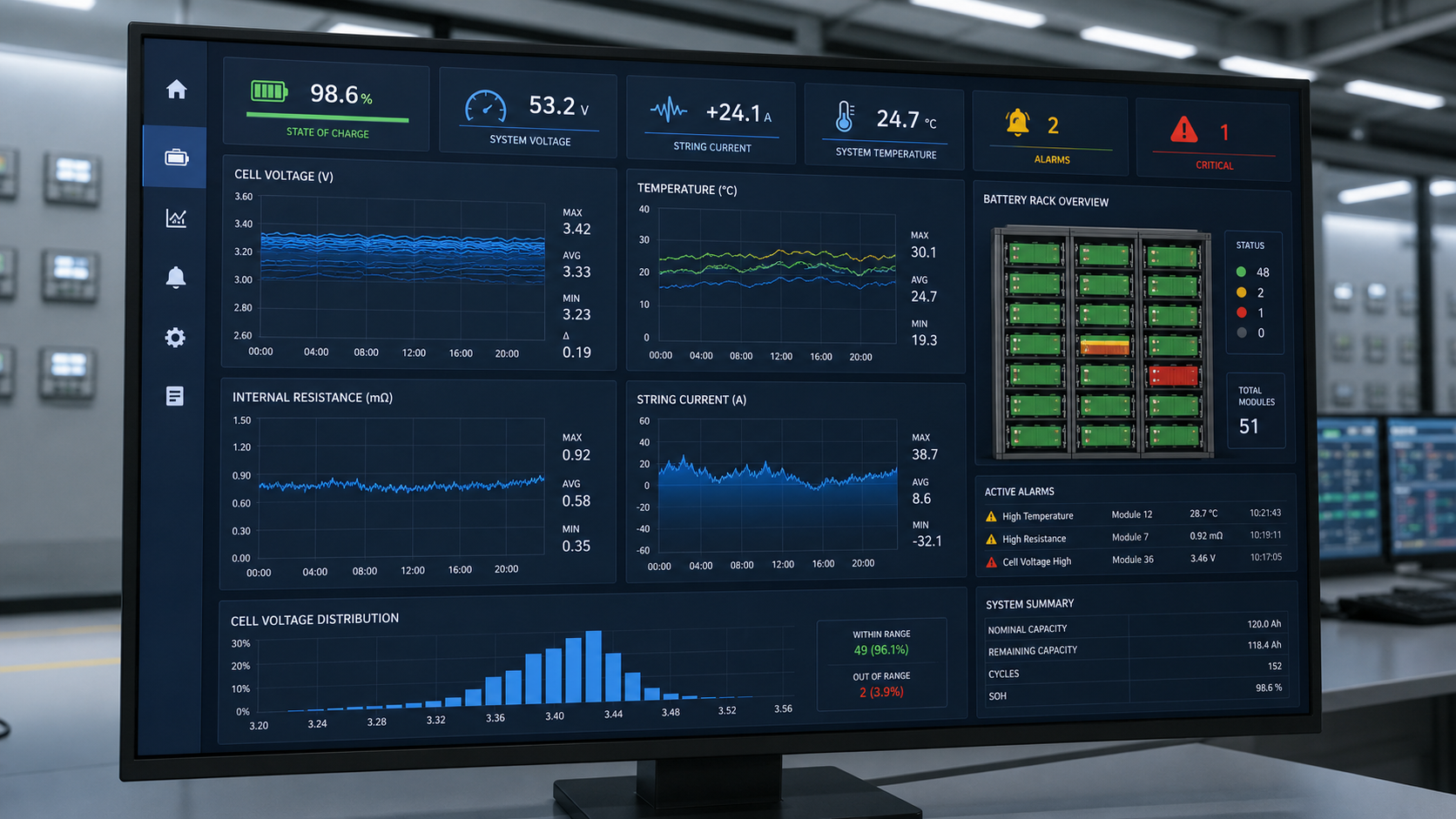
An effective system should monitor both individual cells and the complete battery string. The most important parameters include the following.
Cell Voltage
Continuous cell voltage monitoring detects weak cells, overcharging, undercharging, and voltage imbalance. Even a small deviation can indicate a developing fault.
Battery Temperature
High temperature accelerates battery aging, while uneven temperature may indicate poor ventilation, charging problems, or defective cells. Real-time temperature alarms help prevent thermal damage.
Internal Resistance
Internal resistance is one of the most useful indicators of battery deterioration. Trend monitoring can reveal aging long before capacity loss becomes obvious during a discharge test.
String Voltage and Current
String voltage, float current, charge/discharge current, and ripple current provide valuable information about charger performance and overall battery condition.
Terminal and Connection Condition
Loose or corroded terminals can cause voltage drops and localized heating. Detecting abnormal connection resistance allows maintenance teams to correct these problems before they become safety hazards.
Integration with SCADA and Substation Automation
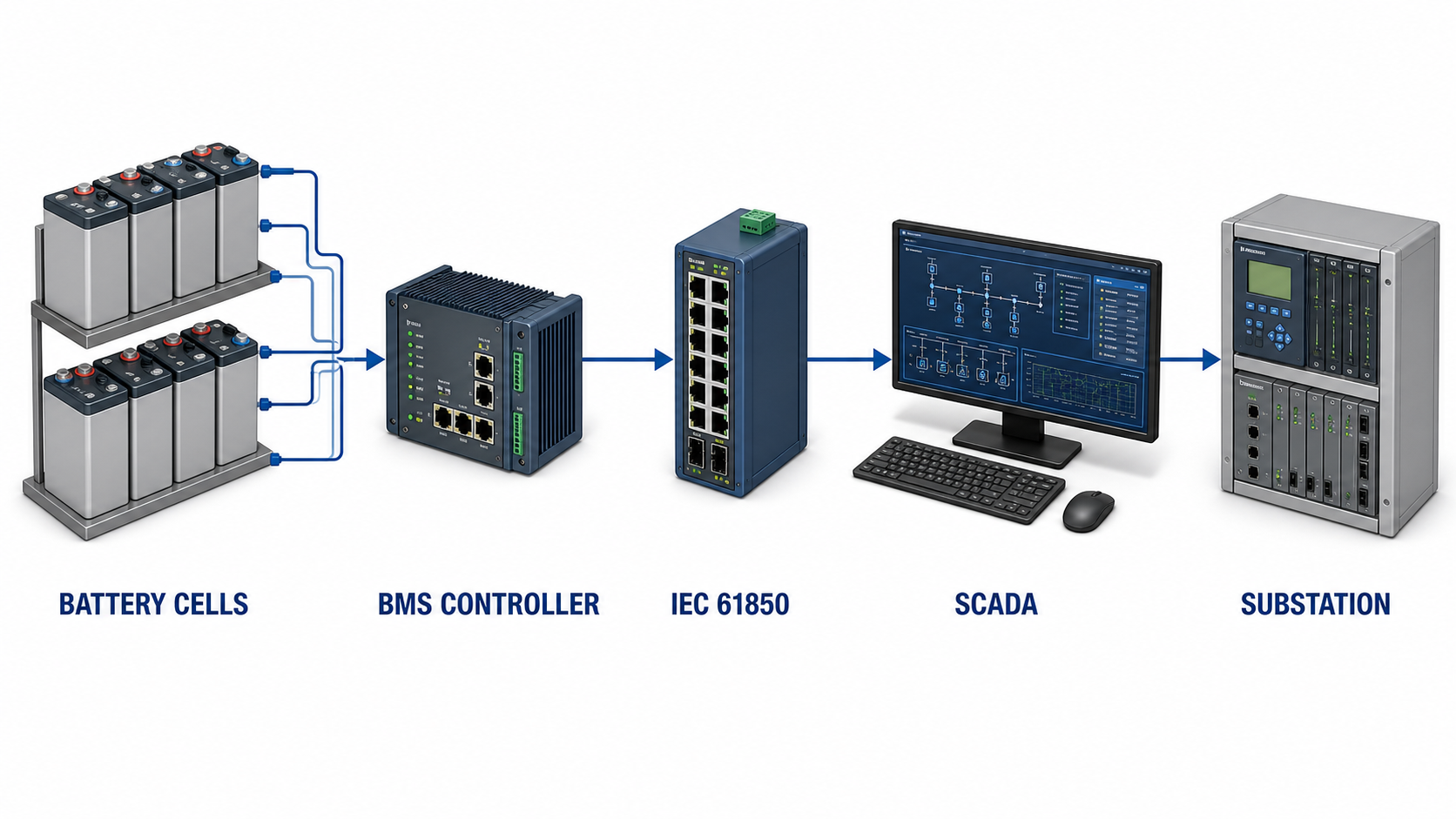
Utilities often need battery data to be available through existing SCADA, EMS, DCS, or network management platforms. A modern battery monitoring system for utilities should therefore support standard industrial communication protocols.
Common integration options include:
- Modbus RTU
- Modbus TCP/IP
- SNMP
- IEC 61850
- REST API
IEC 61850 battery monitoring is particularly valuable for digital substations because it simplifies communication with intelligent electronic devices and substation automation systems.
Key Considerations for System Deployment
Before selecting a substation battery monitoring system, engineers should confirm the following project information:
- Battery chemistry and nominal cell voltage
- Number of cells and battery strings
- Charger and DC system configuration
- Required monitoring parameters
- RS485, Ethernet, fiber, or 4G communication availability
- SCADA, EMS, DCS, or IEC 61850 integration requirements
- Indoor or outdoor installation environment
- Email, SMS, and platform alarm requirements
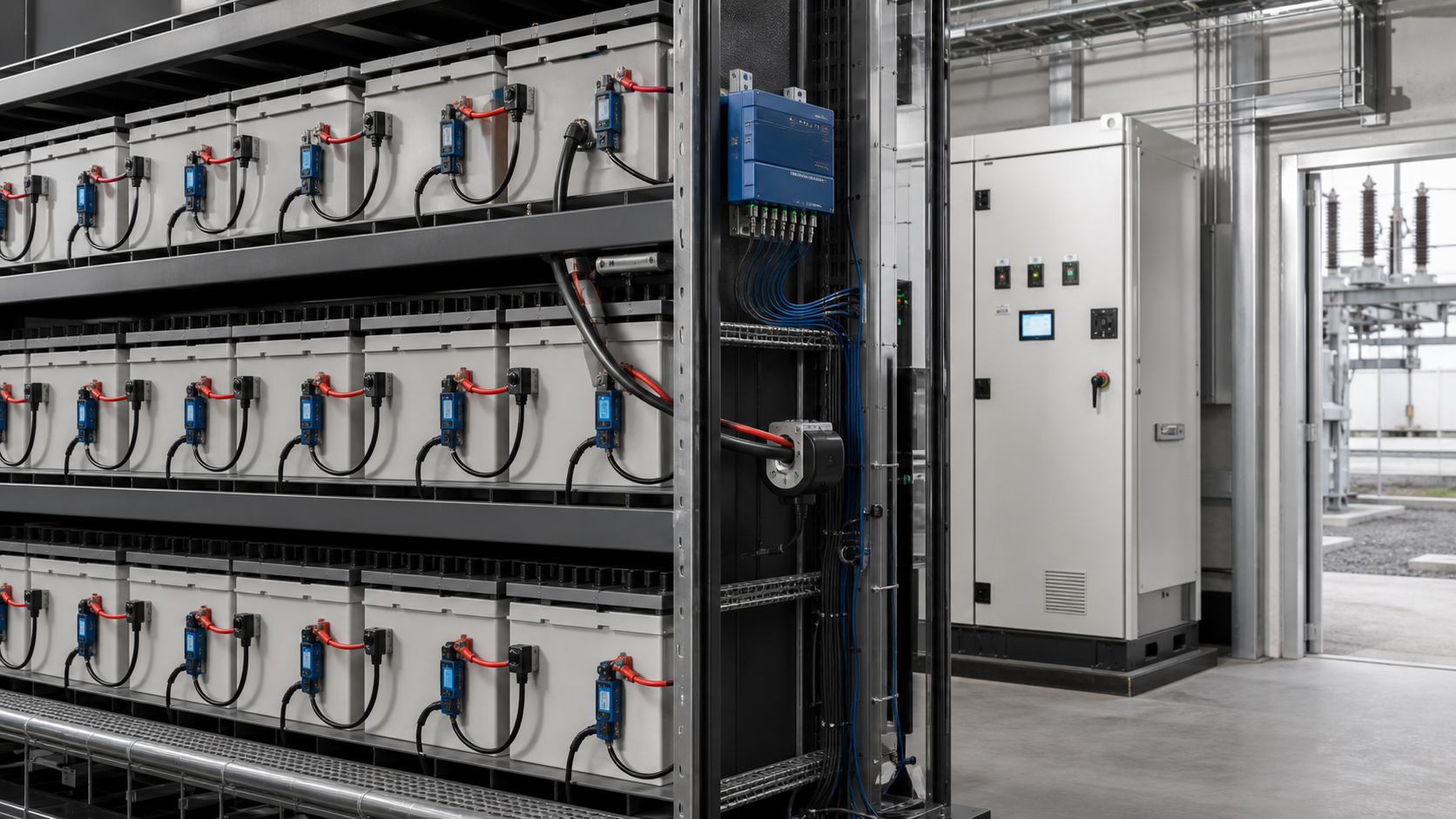
The monitoring sensors should be installed without interrupting normal battery operation whenever possible. Cable routing, insulation, electromagnetic compatibility, and electrical safety procedures must also be considered.
Intelligent Alarms and Predictive Maintenance
A professional system should provide more than raw data. Multi-level alarms, historical trends, and automated reports help engineers understand which cell is abnormal, how quickly it is deteriorating, and when maintenance is required.
Useful functions include:
- Real-time cell and string alarms
- Voltage, temperature, and resistance trend analysis
- Weak-cell identification
- Battery health summaries
- Alarm history and maintenance reports
- Remote multi-site management
This enables utilities to move from scheduled replacement to condition-based maintenance, reducing unnecessary site visits and battery replacement costs.
DFUN Substation Battery Monitoring Solution
DFUN provides a complete substation battery monitoring solution for electrical substations, transmission and distribution networks, power plants, industrial utilities, and renewable energy facilities.
The DFUN solution supports:
- Real-time monitoring of individual battery cells
- Online internal resistance measurement
- Battery and ambient temperature monitoring
- String voltage and current monitoring
- Intelligent alarms and historical trend analysis
- Remote web-based management
- SCADA, Modbus, SNMP, and IEC 61850 integration
- Ni-Cd, VRLA, VLA, and lithium battery support
Whether upgrading an existing installation or designing a new substation, DFUN helps utilities identify battery risks earlier, reduce maintenance costs, and improve backup power reliability.
Frequently Asked Questions
Can a battery monitoring system be installed without shutting down the substation?
In most projects, the monitoring system can be installed while minimizing disruption to existing operations. The installation plan should follow site-specific electrical safety procedures.
Can one system monitor both Ni-Cd and VRLA batteries?
Yes. A professional battery monitoring platform can support multiple battery chemistries, including Ni-Cd, VRLA, VLA, and lithium batteries.
Does online battery monitoring replace capacity testing?
No. Online monitoring provides continuous early warning, while periodic capacity testing verifies actual backup capacity and runtime. Using both provides more complete battery health information.
How does the system reduce false alarms?
Configurable thresholds, alarm delays, multi-level alerts, and trend analysis help distinguish genuine deterioration from temporary fluctuations.
Request a Substation Battery Monitoring Proposal
To recommend the right solution, please provide the battery type, cell voltage, number of cells and strings, communication method, existing SCADA or automation platform, alarm requirements, and installation environment.
Contact DFUN to discuss your project and receive a customized substation battery monitoring system proposal.

 Русский
  Español
  Deutsch
  简体中文
简体中文  ไทย
ไทย  Français
  English
  Português
  italiano
  Bahasa Melayu
  हिन्दी
  Tiếng Việt
  日本語
日本語  한국어
한국어  বাংলা
বাংলা  עברית
עברית  Latine
  Nederlands
  українська
  தமிழ்
தமிழ்  Polski
  Türkçe
  ພາສາລາວ
  ភាសាខ្មែរ
  ဗမာစာ
ဗမာစာ  Filipino
  Suomi
Suomi  Ελληνικά
  Svenska
  Norsk
Norsk  magyar
  Română
  Čeština
  Монгол
  қазақ
қазақ  Српски
  فارسی
فارسی  Kiswahili
  Slovenčina
  Slovenščina
  Հայերեն
  Dansk
Dansk  اردو
اردو  Shqip
Shqip  Hrvatski
  Afrikaans
  Gaeilge
  Eesti keel
  Māori
Māori  සිංහල
සිංහල  नेपाली
  Oʻzbekcha
  latviešu
  অসমীয়া
  Aymara
  Azərbaycan dili
  Bamanankan
  አማርኛ
አማርኛ  Euskara
  Беларуская мова
  भोजपुरी
  Bosanski
  Български
  Català
  Cebuano
  Corsu
Corsu  ދިވެހި
  डोग्रिड ने दी
  Esperanto
  Eʋegbe
  Frysk
Frysk  Galego
  ქართული
  guarani
  ગુજરાતી
  Kreyòl ayisyen
  Hausa
Hausa  ʻŌlelo Hawaiʻi
  Hmoob
Hmoob  íslenska
  Igbo
Igbo  Ilocano
  Basa Jawa
  ಕನ್ನಡ
ಕನ್ನಡ  Kinyarwanda
  गोंगेन हें नांव
  Krio we dɛn kɔl Krio
  Kurdî
Kurdî  Kurdî
Kurdî  Кыргызча
  Lingala
  Lietuvių
  Oluganda
  Lëtzebuergesch
  Македонски
  मैथिली
  Malagasy
  മലയാളം
  Malti
Malti  मराठी
मराठी  ꯃꯦꯇꯥꯏ (ꯃꯅꯤꯄꯨꯔꯤ) ꯴.
  Mizo tawng
  Chichewa
  ଓଡ଼ିଆ
ଓଡ଼ିଆ  Afaan Oromoo
  پښتو
پښتو  ਪੰਜਾਬੀ
  Runasimi
  Gagana Samoa
  संस्कृत
  Gaelo Albannach
  Sepeti
  Sesotho
  chiShona
  سنڌي
سنڌي  Soomaali
  Basa Sunda
  Wikang Tagalog
  Тоҷикӣ
  Татарча
  తెలుగు
  ትግንያውያን
  Xitsonga
  Türkmençe
  संस्कृत
  ئۇيغۇرچە
  Cymraeg
  ייִדיש
  Yorùbá
  isiZulu